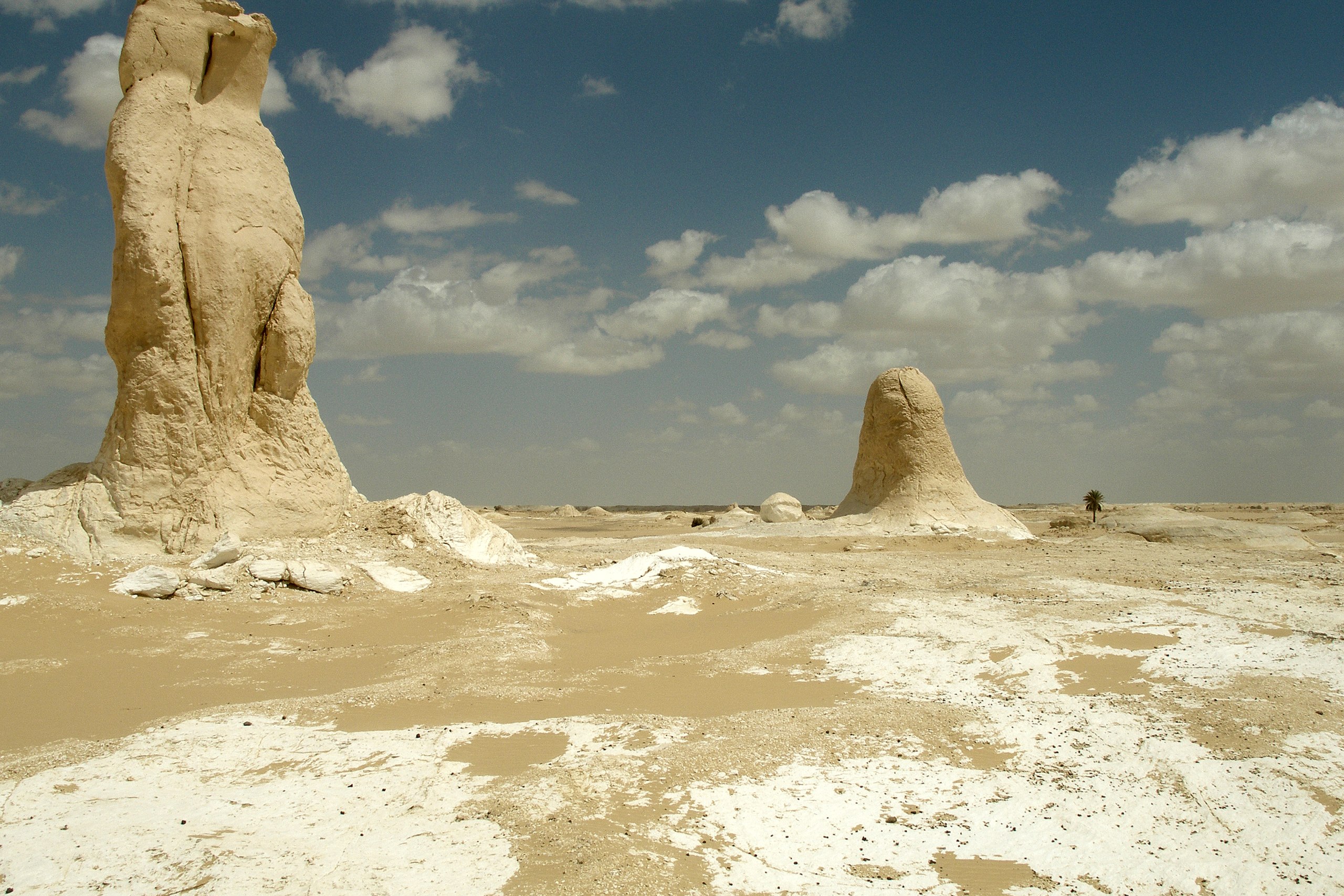
The White Desert National Park, Egypt
The White Desert National Park is one of Egypt’s most surreal and otherworldly landscapes, offering visitors a rare glimpse into a natural environment shaped entirely by wind, sand, and time. Located about 500 kilometers southwest of Cairo, near the Farafra Oasis in the Western Desert, this protected area is famous for its striking white chalk rock formations that rise dramatically from golden desert sands, creating a scene unlike anywhere else in the world.
A Landscape Sculpted by Nature
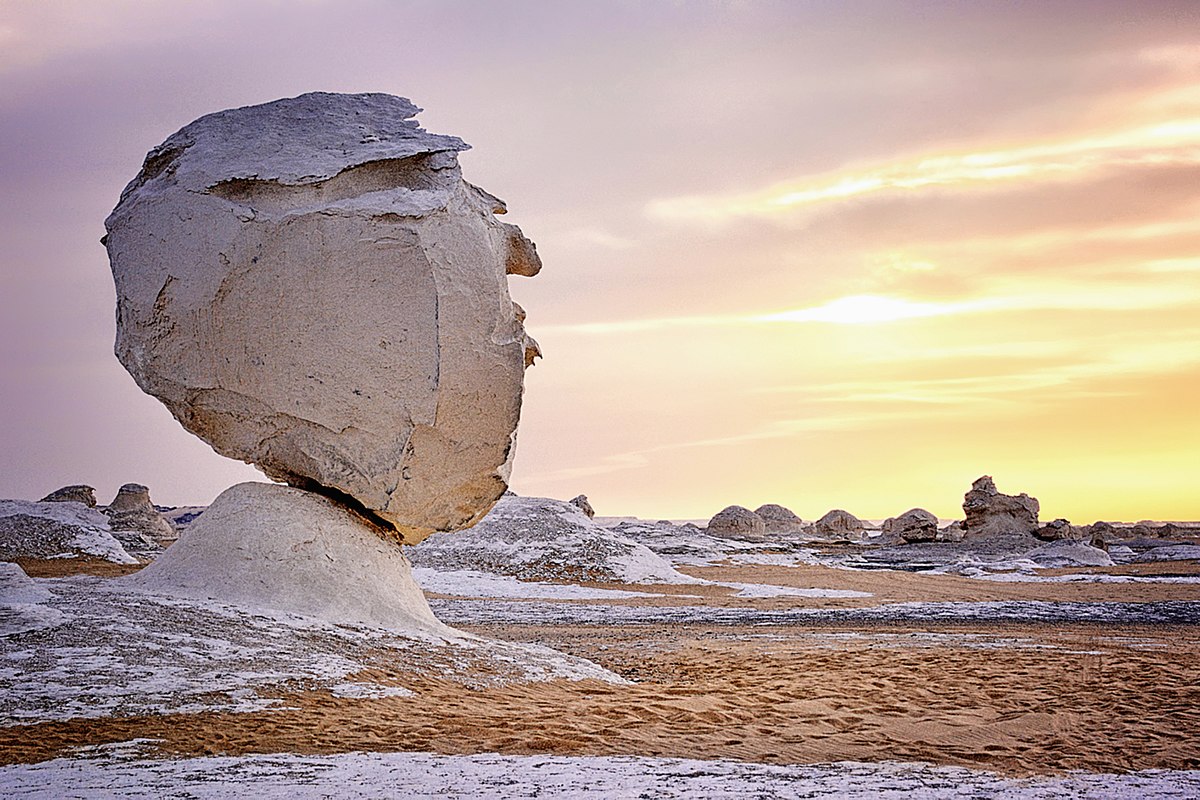
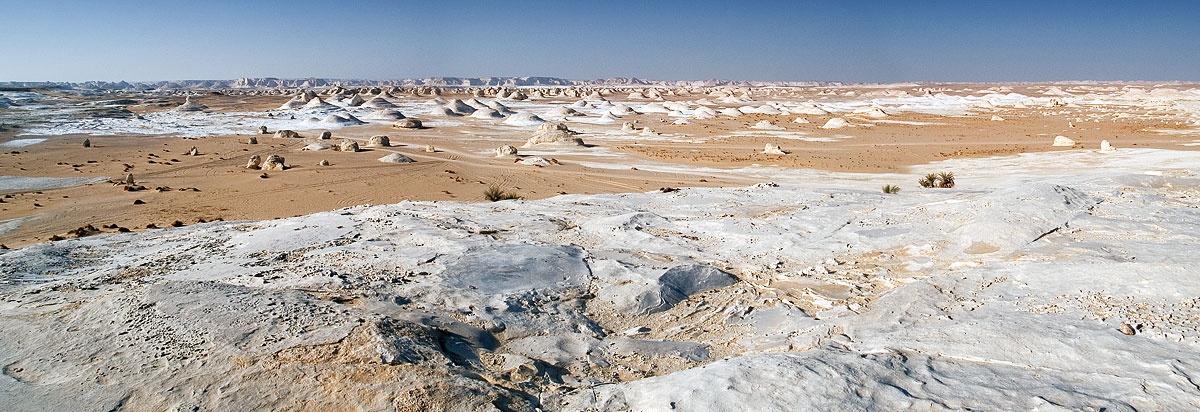
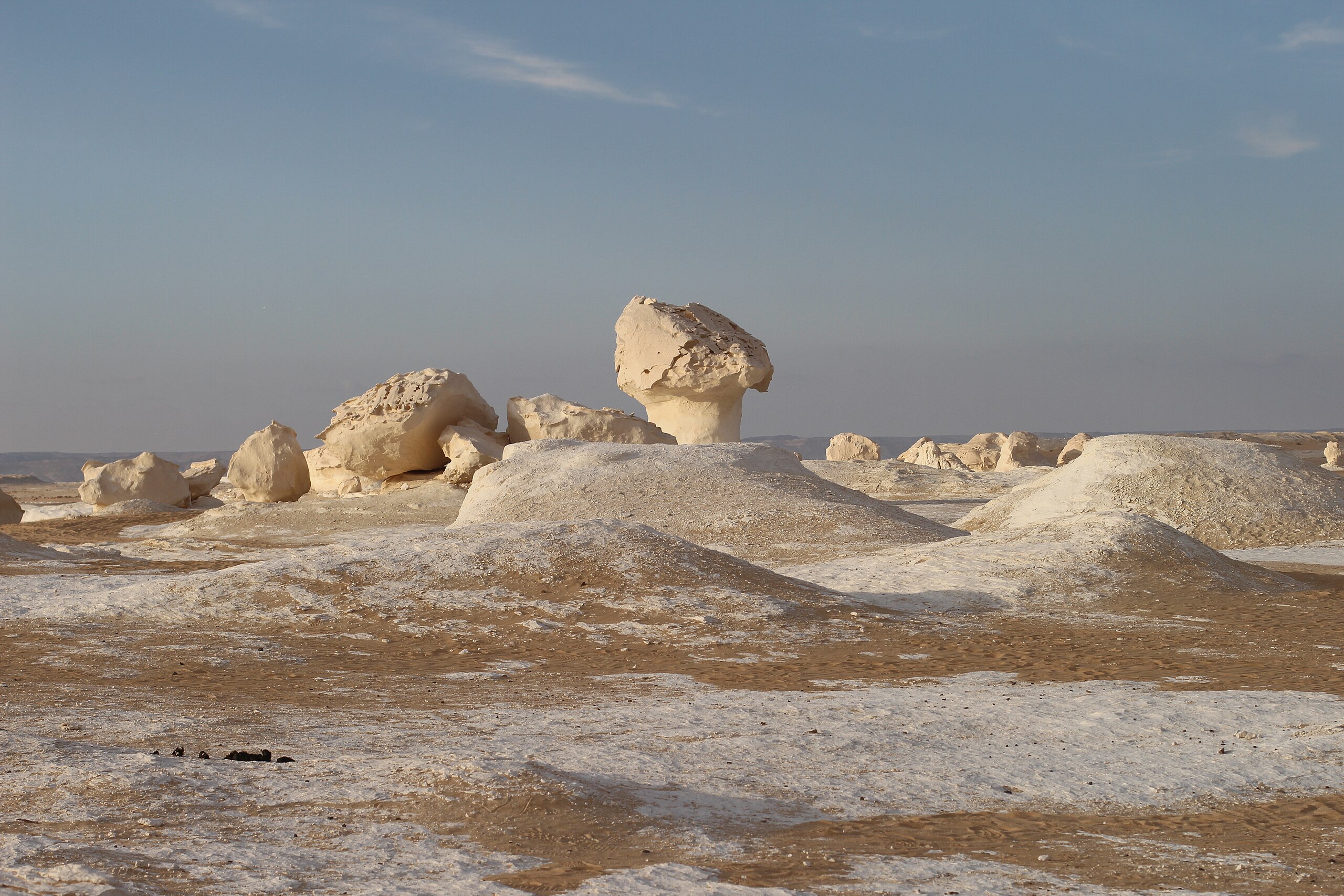
What makes the White Desert truly unique are its bizarre and beautiful limestone formations, sculpted over millions of years by erosion. These chalk formations resemble giant mushrooms, camels, icebergs, cones, and abstract sculptures, glowing white under the sun and taking on magical hues at sunrise and sunset. The contrast between the bright white rocks, soft sand dunes, and clear blue skies makes the desert feel almost lunar in appearance.
Geological and Natural Significance
The White Desert was once submerged under an ancient sea, and its chalk rocks are remnants of marine sediments that date back to prehistoric times. Fossils of seashells and marine organisms can still be found in parts of the park, offering insight into the region’s distant past. In recognition of its geological importance and fragile ecosystem, the area was declared a national park in 2002 to preserve its unique formations and wildlife.
Wildlife and Desert Life
Despite its harsh environment, the White Desert supports a surprising variety of wildlife. Desert foxes, gazelles, and jackals may be spotted, while migratory birds occasionally pass through the area. Hardy desert plants manage to survive in this arid landscape, adding subtle touches of green to the otherwise pale terrain.
Experiencing the White Desert
Most visits to the White Desert are done as guided 4×4 excursions, often combined with nearby attractions such as the Black Desert, Crystal Mountain, and the Farafra Oasis. Camping overnight is one of the highlights of the experience. As night falls, the desert transforms into a peaceful, silent expanse beneath a sky filled with stars, offering one of the best stargazing experiences in Egypt. Simple Bedouin-style meals, campfires, and sleeping under the open sky create an unforgettable desert adventure.
Best Time to Visit
The ideal time to visit the White Desert is between October and April, when temperatures are cooler and more comfortable for exploration. During the summer months, extreme heat can make travel challenging, so guided tours and proper preparation are essential.
A Destination Like No Other
The White Desert National Park is not just a destination—it’s an experience that appeals to adventurers, photographers, nature lovers, and travelers seeking something beyond Egypt’s well-known historical sites. Its silent beauty, dramatic formations, and untouched atmosphere make it one of Egypt’s most extraordinary natural wonders and a must-see for those looking to explore the country’s diverse landscapes beyond the Nile Valley.